Posted on 05 May 2026 • Modifications
Two-Stroke Café Racer Build Guide: How to
Author
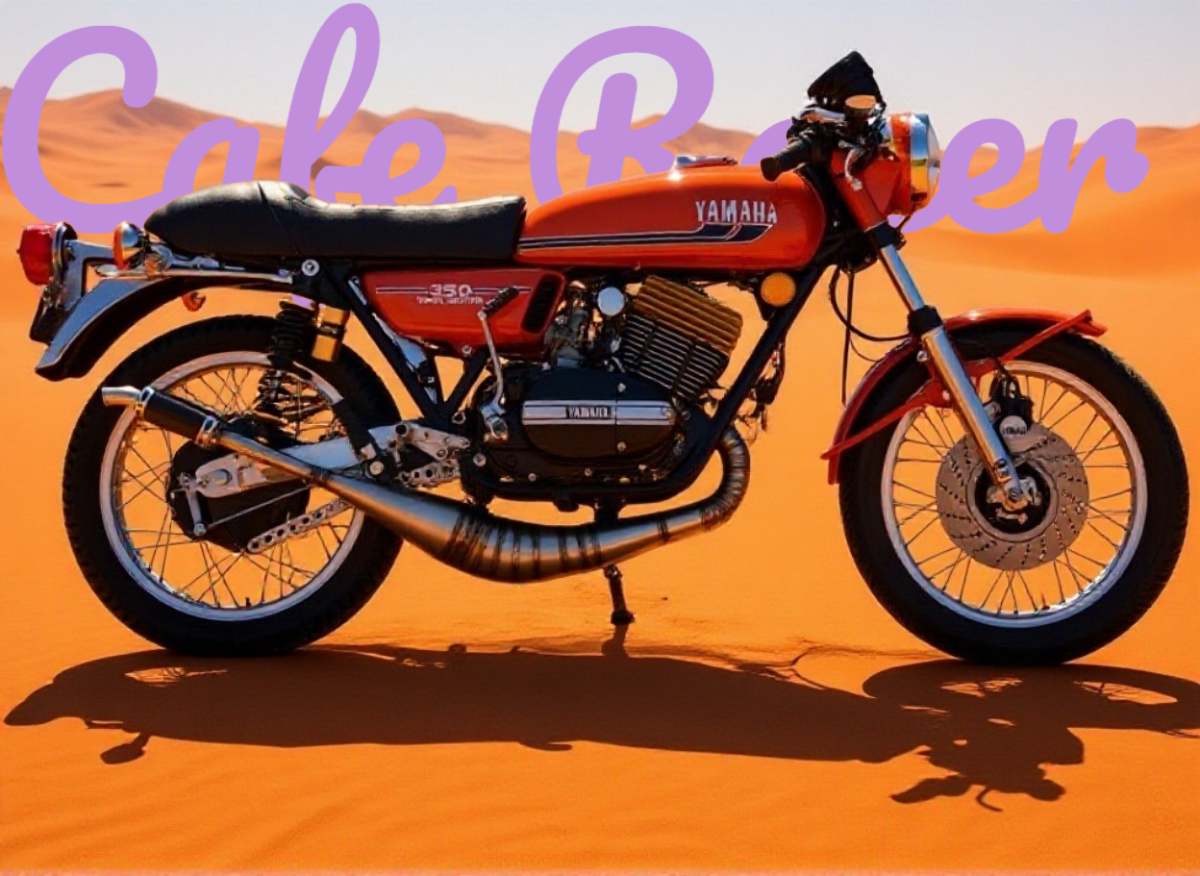
Two-stroke café racer build guide: how to convert a vintage smoker
Two-strokes don't get enough respect in the café racer world. Everyone chases CB750s and SR500s while perfectly good RD350s, KH400s, and GT380s sit in garages waiting for someone with taste to notice them.
Here's how to turn one into something worth riding.
Pick your donor right
The RD350 is the obvious choice. Yamaha built them from 1973 to 1975, they weigh 154 kg dry, and the reed-valve top end is about as simple as an engine gets. Parts are still available worldwide. The community is enormous.
If you want something wilder, the Kawasaki H1 500 Mach III gives you 60 hp from 499cc and handling that will genuinely try to kill you. That's part of the appeal for some people. Probably not the right first build, though.
The Suzuki GT380 is the sleeper pick. Triple-cylinder, disc valves, still relatively cheap in 2025. Less cachet than the Kawasaki triples, which means you can find decent ones for under $1,500 if you're patient.
What the conversion actually involves
You're reshaping a standard silhouette into a café racer one.
The typical two-stroke donor comes with upright bars, a wide dual seat, and mid-mounted pegs. The café racer shape needs clip-ons, a single-seat unit, rear-sets, and a tank that tucks low and narrow. That's the work. Everything else is details.
The frame
Strip it completely first. Get it to bare metal, check every weld, inspect the steering head for cracks. Two-strokes from the 70s were ridden hard.
Once you're satisfied it's solid, you have 3 decisions to make.
Loop the subframe
Chop the stock tail section, weld in a clean hoop. This is where the silhouette gets defined. If you can weld, do it yourself. If you can't, find someone who can, because a bad weld on a subframe will bite you at speed.
Bracing
The H1 and early RD frames flex noticeably. A front down-tube brace and gussets at the steering head tighten the whole chassis. About 20 minutes of welding, dramatic improvement in feel.
Center stand mount
Ditch it. Cleans up the look, saves maybe 600g.
Suspension
Stock two-stroke forks from the early 70s are soft and vague.
For the RD350, an XS650 fork swap is what a lot of builders reach for. Same diameter, better damping, drops right in with minor machining on the lower triple clamp. Fork oil weight and spring rate matter more than most people realise, so spend time here before spending money anywhere else.
Rear suspension: Hagon shocks are the practical choice. About $200 a pair, made in the UK, adjustable preload, fit most Japanese twin-shock frames with the right eye diameter. YSS if you want to spend more.
The engine: touch it or leave it?
If it runs clean and the power delivery is smooth, leave the internals alone. Port work on two-strokes can genuinely destroy low-end power if you do it wrong. The gains are real but they sit at the top of the rev range, which makes the bike annoying in traffic.
What you should actually do: replace the reeds if they're more than 5 years old. Boyesen carbon fiber reeds for the RD run about $80 and the throttle response difference is immediate. Repack or replace the expansion chambers. If the chambers are dented, get them repaired or buy aftermarket. Toomey pipes are the benchmark for the RD350.
Then there's jetting. This is where two-stroke builds go sideways most often. If you've changed the airbox, the pipes, or the reeds, you need to rejet. rd350.info has a complete carburetor tuning guide covering main jet size, needle position, and air screw settings. Do this on a dyno if you can. The stock Mikuni VM28s respond well when you get it right.
Squish band
Most builders skip this. They shouldn't.
Tightening the squish clearance on an RD350 head is one of the cheapest power gains available, and rd350.info's squish band guide is the best-documented resource for it online. It covers what clearance to aim for, how to measure it, and what head gasket changes are needed. Takes an afternoon.
Bodywork
The tank and seat unit define everything else.
For the RD, the stock tank actually works. It's narrow and low already. Sand off the chrome side panels, fill any dents with lead or epoxy filler, weld up the stock petcock holes and replace with a single flush-mount unit underneath.
For the seat: make your own or buy a pre-formed fiberglass unit from Motoism or Dime City Cycles. Cut the hump about 60mm shorter than you think you need. Tighter always looks better.
Headlight: a 7-inch Bates-style unit on a bracket fabbed from 10mm aluminum plate, bolted to the lower triple clamp. Keep the wiring buried inside the headlight shell.
Brakes
Two-stroke drums from 1973 are the weakest part of any of these builds.
The RD350 front drum is decent for the power level, but for a serious build, a disc swap from a later RD400 is worth the effort. It requires a new front hub laced to your existing rim, which runs about $300-400 in labor if you're not doing your own wheel building. Rear drum is usually fine. Adjust the cable, replace the shoes if there's less than 3mm of material left.
Electrics
Two-stroke electrics are simple because two-strokes don't need much. No oil pump motor, no heavy battery demands.
Rip out the entire loom. Rebuild from scratch with 14-gauge wire, waterproof connectors, and a small lithium battery. A Shorai LFX14 weighs 680g and is overkill in the best way. You need ignition, lights, and a kill switch. That's the whole system.
The points ignition on the RD350 works fine if the timing plate isn't worn. For the full ignition timing procedure and specs, rd350.info has the most complete reference available, including timing figures for both the US and Indian Rajdoot variants. A Boyer Bransden electronic ignition eliminates the fiddle entirely for about $120.
Before you start: get the service manual
Seriously. shop.rd350.info has downloadable service manuals for the RD350 and RD400. Print the torque specs section and pin it above your bench before you touch a single fastener.
People also ask
What's the best two-stroke motorcycle for a café racer build?
The RD350 for a first build. Parts availability decides it: you can still get pistons, gaskets, reeds, and carb kits from multiple suppliers worldwide. The KH400 is more interesting but harder to source.
Are two-stroke café racers street legal?
In most of the US and UK, yes. Emissions rules that killed new two-stroke sales apply to new vehicle certification, not registration of existing bikes. Check your local noise ordinances though. Some modified expansion chambers are genuinely very loud and will get you ticketed in cities.
How much does a two-stroke café racer build cost?
$2,000 to $6,000 depending on the donor and how much fab you do yourself. A clean running RD350 costs $1,200-2,000 in 2025. Add $800-1,200 in parts and you have something respectable. A full custom build with powder coat, proper suspension, disc conversion, and new bodywork gets to $5,000 fast.
What's the hardest part of a two-stroke café racer build?
Jetting and matching the expansion chambers. A badly jetted two-stroke runs hot, pings, and seizes pistons. Get this right before you do anything cosmetic.
Do two-stroke café racers need much maintenance?
More than a four-stroke. Top ends need rebuilds every 10,000-15,000 km on a well-tuned street bike. Gearbox oil every 3,000 km. Reed valves every few years. Rebuilding an RD350 top end takes about 3 hours and costs $150 in parts, so it's manageable if you do it yourself.
A two-stroke café racer is noisier, smokier, and more demanding than anything with a four-stroke under the tank. The power delivery is abrupt, the maintenance schedule is real, and the smell of premix will follow you everywhere.
Worth every bit of it.

 User Torque Posts by this author Posts by this author