
Posted on 01 Apr 2025 • Classic
Yamaha RD350 YPVS Tuning Secrets: Unleashing Two-Stroke Glory
Author
 User Torque Posts by this author Posts by this author
Yamaha RD350 YPVS Tuning Techniques and Performance Factors
Imagine this, man: it's a crisp fall evening, the kind where the air bites just enough to wake you up. You're crouched in a dimly lit garage, the smell of two-stroke oil and gasoline thick enough to taste, and there she is—a Yamaha RD350 YPVS, gleaming under a flickering bulb like some punk-rock relic from the '80s. I've been obsessed with this bike since I was a kid, flipping through dog-eared magazines, dreaming of the day I'd twist that throttle and feel the world blur. This isn't just a motorcycle—it's a time machine, a middle finger to tame four-strokes, and a tuning playground that still gets my blood pumping. Let's crack a chai, kick back by the bonfire, and dive into why this beast matters—its wild history, greasy guts, banshee wail, and why gearheads like us still chase it down today.
How the Yamaha RD350 YPVS Came to Be
Test Your Motorcycle Disks first
Loading question...
Let's rewind to the early '80s, buddy. Yamaha had been cranking out two-strokes like the RD350LC—liquid-cooled chaos machines that tore up streets and tracks alike. But by '83, they wanted something crazier, something that'd make jaws drop at the Cologne Motorcycle Show. Enter the RD350 YPVS—Yamaha Power Valve System slapped onto that snarling 347cc twin. They billed it as "the closest thing to a road-going racer," and damn, they weren't kidding. Born in Japan from '83 to '86, it hit markets like a Molotov cocktail—called the RZ350 in the States, where it became the only legal two-stroke street bike after emissions laws choked the rest out.
This wasn't a clean break from the past, though. The RD350 YPVS shared bones with the LC—same bore and stroke (64mm x 54mm), same rebel spirit. But that power valve? That was Yamaha flexing, straight outta their Grand Prix playbook. It tweaked exhaust timing on the fly, smoothing out the powerband so you didn't just get a kick in the pants at 6,000 RPM—it pulled like a freight train from idle to redline. Production shifted to Brazil in '92 as the RD350R, running 'til '95 with a twin-headlamp facelift, but the Japanese originals? Those are the holy grail. The RD faded as two-strokes got legislated into oblivion, but its legend? Man, that's immortal.
Getting Greasy: Yamaha RD350 YPVS Tech Specs
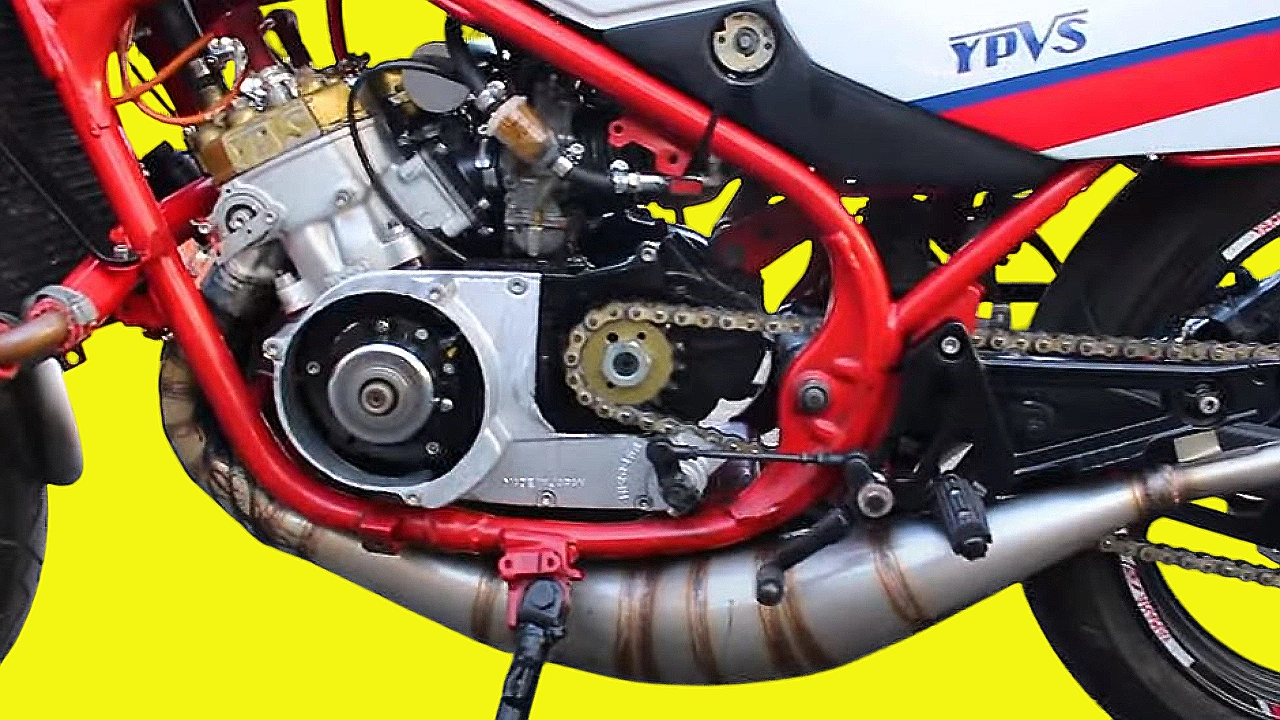
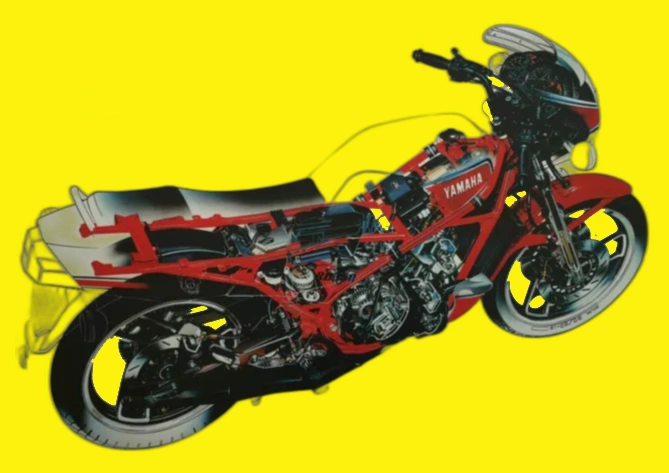
Pop the hood—or, hell, the side panels—and you're staring at a two-stroke masterpiece. That 347cc parallel-twin is liquid-cooled, keeping it from frying itself when you're wringing its neck. Two 26mm Mikuni carbs shove fuel down its throat, and the YPVS valves dance in the exhaust ports, tweaking flow like a conductor with a baton. Stock, it's pumping out 50-55 horsepower at the crank—45-50 at the wheel if you're lucky—peaking around 9,500 RPM. Torque? About 30 lb-ft at 8,000 RPM, enough to snap your head back if you're not ready.
The frame's a steel tubular job—nothing fancy, but stiff enough to keep the chaos in check. Up front, you've got 35mm forks, air-assisted on later models, soaking up bumps but flexing if you push too hard. The rear's a monoshock—soft as hell stock, begging for an upgrade. Brakes? Twin discs up front, single out back—decent for the '80s, but you'll be praying to the grip gods on a wet downhill. It rolls on skinny 18-inch wheels—90/90 front, 110/80 rear—light as a feather at 320 pounds dry. Quirks? Oh, the ignition's a points system that'll foul plugs faster than you can curse, and the clutch hates stop-and-go traffic. Picture a grimy RD350 YPVS mid-turn here—those narrow tires clawing asphalt like a rabid dog.
But here's where the tuning magic kicks in. Swap those stock pipes for expansion chambers, and you're waking the neighbors. Bigger carbs—28mm or 36mm TZRs—gulp more air, begging for jet tweaks. Skim the head, bump compression to 7.5:1, and it's a different animal. Ever tried porting one? Polish those exhaust ports, raise 'em a millimeter, and watch it scream. It's raw, messy, and perfect.
Riding the Yamaha RD350 YPVS: What It Feels Like
Twist that throttle, and it's like unleashing a swarm of pissed-off hornets. The two-stroke tang hits your nose first—sweet, sharp, addictive as hell. Below 6,000 RPM, it's tame, puttering along like it's got manners. Then the power valve kicks in, and bam—it's a gut punch, a howling banshee tearing toward 10,000 RPM. The front end lifts if you're sloppy, and that high-pitched wail echoes off every wall. I've ridden mine down twisty backroads, chasing that rush where the world narrows to just you and the bike—pure, unfiltered freedom.
Handling's a mixed bag. It's nimble as a cat, flicking into corners with those skinny tires gripping harder than you'd expect. But push it too far, and the soft suspension wobbles—feels like the frame's begging for mercy. Brakes'll stop you, eventually, but you better plan ahead. Maintenance? Man, it's a love-hate thing. Syncing those carbs is a midnight curse-fest—tweak the air screws 'til it purrs, not bucks. The YPVS valves gunk up if you slack on cleaning, and pistons wear fast if you skimp on good oil. Ever smelled that two-stroke tang after a long ride? It's burned into my soul.
Tuning takes it next-level. Aftermarket pipes—like a set from TwoStrokeNuts.com—shift the powerband, making it a top-end screamer or a low-end torque monster, depending on your vibe. I've bolted on a high-flow air filter and rejetted 'til my fingers were black—45 horsepower jumps to 60, easy. Crank it to 70 with a big-bore kit, and you're dicing with 500cc four-strokes. It's not perfect—vibes'll numb your hands, and it drinks fuel like a frat boy—but that's the charm.
Why Collectors Lose Their Minds Over the Yamaha RD350 YPVS
Today, the RD350 YPVS is a unicorn. Japan-built '83-'86 models are rare—most got thrashed, crashed, or rusted out. Finding one with matching numbers and clean barrels? Good luck, buddy. Prices are climbing—stockers go for $5,000-$8,000, pristine ones hit $10,000-$15,000, and fully tuned resto-mods? Sky's the limit, $20,000+. Brazil-built RD350Rs are cheaper—$3,000-$6,000—but purists scoff at the build quality. Rarity's part of it; nostalgia's the rest. This was the bike for '80s rebels—cheap, fast, and loud as hell. Now, it's a ticket back to when life was simpler, gas was a buck, and two-strokes ruled.