Posted on 03 Aug 2025 • History
Lambretta Scooter Models List: 1947-2024 Specs & Prices
Author
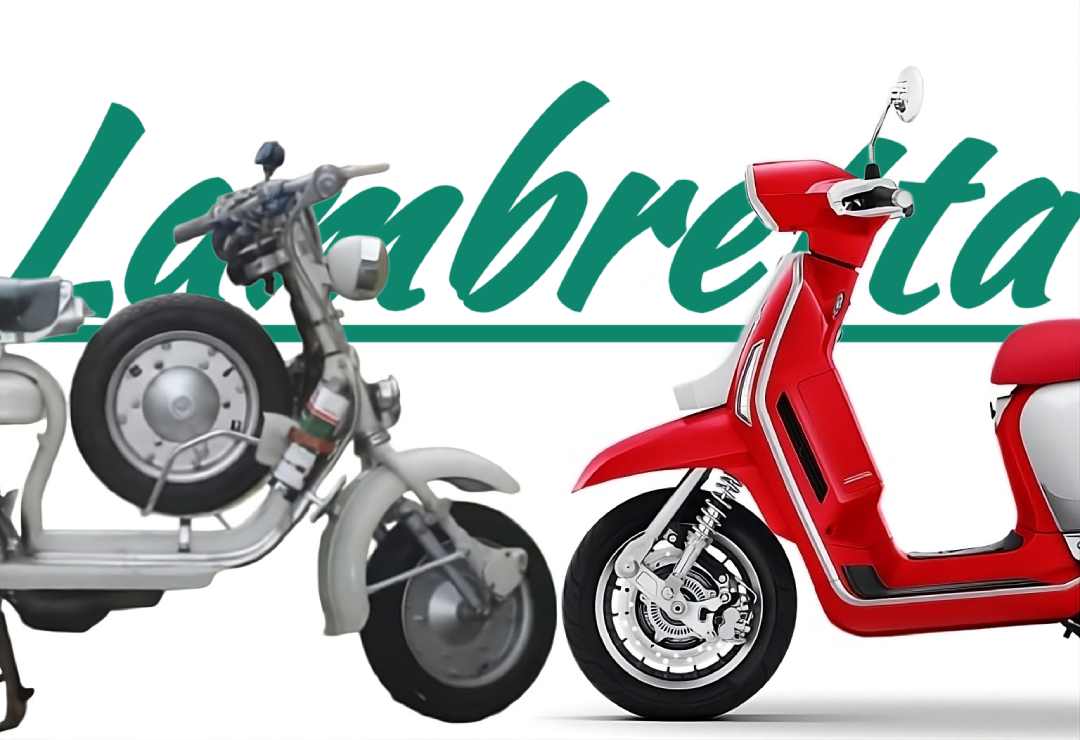
Lambretta Scooter Models List: 1947–2024 Specs & Prices
The only guide you need — complete model history, real specs, honest prices, and no filler.
If you've ever seen a Lambretta parked on a cobbled street in Milan and thought, "what is that beautiful thing?" — you're not alone, and you're in the right place.
Lambretta is an Italian scooter brand with a story that is, frankly, too dramatic for one article. Born from post-war poverty in 1947, it conquered the world by 1960, technically "died" in 1971, got resurrected in India, Spain, and eventually relaunched in Italy in 2017 — and is now building electric scooters. That's not a product history. That's a soap opera with better exhaust notes.
This guide covers the complete Lambretta scooter models list from 1947 to 2024, with verified specs, real market prices, and enough context to make you genuinely dangerous at a scooter rally. For more deep dives into classic two-stroke culture, check out the RD350 blog.
Where Did Lambretta Come From — and Why Does It Matter?
Lambretta wasn't born out of passion for motorcycles. It was born out of necessity. After World War II, Italy was rebuilding from rubble and needed cheap, practical transport urgently. Ferdinando Innocenti, a steel-tube manufacturer in Milan, looked at the chaos and saw a business opportunity.
He built his factory in the Lambrate district of Milan — and named the scooter after it. The first machine left the production line in 1947, and within five years Innocenti was exporting to over 30 countries. By the late 1950s, Lambretta was producing more than 150,000 scooters per year from a single factory (Innocenti historical archives). That's not a niche hobby brand. That's a serious industrial story.
What Were the Early Lambretta Models? (1947–1951)
The early models were raw, functional, and genuinely revolutionary for their time — even if they wouldn't look great on Instagram.
Lambretta Model A — 1947 | The One That Started Everything
- Engine: 125cc, single-cylinder 2-stroke
- Power: ~4.3 bhp
- Top Speed: ~65 km/h (40 mph)
- Gearbox: 3-speed, hand-operated
- Original Price (Italy): ~114,000 Lire (approx. $180 USD equivalent)
- Frame: Open tubular steel — zero body panels, fully exposed
The Model A had no leg shields, no weather protection, and no concessions to comfort. It was essentially a motorised bench with an engine. But it moved, it was affordable, and in 1947 Milan, that combination was close to miraculous.
Lambretta Model B — 1948 | A Quiet but Important Update
- Engine: 125cc 2-stroke with revised carburettor
- Top Speed: ~68 km/h
- Frame: Same open design; mechanical improvements only
The Model B was a small but meaningful step. Innocenti refined the fuel delivery, reduced engine vibration, and kept the price accessible. Sales picked up steadily, which told him that people genuinely wanted this machine.
Lambretta Model C & LC — 1950 | The Design Turning Point
- Engine: 125cc 2-stroke
- Power: ~4.8 bhp
- Top Speed: ~70 km/h
- The Big Change: The LC added full front leg shields — a design decision that would define scooters globally for 70+ years
The LC wasn't just more comfortable; it was the moment Lambretta found its visual identity. Those leg shields kept riders clean, dry, and marginally warmer in city traffic. It sounds minor. It was anything but. Every modern scooter on the road today carries that DNA.
Why Was the LD Series Lambretta's First Massive Hit? (1951–1958)
The LD turned Lambretta from a local success into a global brand. It combined proper bodywork with genuine usability — and it sold in extraordinary numbers.
Lambretta LD 125 & LD 150 — 1951 to 1958
- Engine: 125cc or 150cc 2-stroke
- Power: 5.2 bhp (125) / 6.5 bhp (150)
- Top Speed: 75–85 km/h
- Gearbox: 3-speed, updated to 4-speed in later runs
- Seating: Twin-seat configuration introduced
- Production: Over 500,000 units across the full run
- Current Collector Price: £1,500–£4,500 (condition-dependent)
More than half a million units in seven years. The LD proved Lambretta had mass-market staying power. The 150cc variant had enough torque for country roads, and the fully enclosed bodywork made it sensible daily transport — not just a novelty. If you want a classic Lambretta that is usable, findable, and won't destroy your finances, the LD is still a smart choice today.
What Made the Li and TV Series So Culturally Iconic? (1958–1968)
This is where the legend really solidified. The Li and TV series produced the machines that defined an entire decade of style, music, and youth culture — particularly in Britain.
Lambretta Li 125 & Li 150 — Series 1, 2, and 3 (1958–1968)
- Engine: 125cc or 150cc 2-stroke
- Power: 6–7.5 bhp
- Top Speed: 85–95 km/h
- Frame: Monocoque pressed steel (very rigid, very clean lines)
- Weight: ~100 kg (dry)
- Current Value: £2,000–£6,000 fully restored | £500–£1,500 as project
The Li Series 2 (1959–1961) is the model most collectors point to as the perfect-looking Lambretta. Clean flanks, chrome-rimmed headset, harmonious proportions. It's genuinely a beautiful machine, and it rides as well as it looks once properly sorted.
Lambretta TV 175 & TV 200 — 1957 to 1965 | The Sport Scooter Before Anyone Had That Category
- Engine (TV 175): 175cc 2-stroke | 8.6 bhp | ~95 km/h
- Engine (TV 200): 200cc 2-stroke | 11 bhp | ~110 km/h
- Gearbox: 4-speed twist-grip
- "TV" Stands For: Turismo Veloce — "fast touring"
- Frame: Reinforced monocoque for sustained higher speeds
- Current Value: £3,500–£9,000 depending on condition
The TV 200 was alarmingly fast for 1963. For British Mods looking for something that could keep pace with a Norton Commando on a Saturday night — yet still look chic parked outside a coffee bar — this was it. The TV is what turned Lambretta from Italian transport into British counterculture. That cultural crossover is a large part of why these models are worth so much today.
Lambretta SX 150 & SX 200 — 1966 to 1969
- Engine: 150cc / 200cc 2-stroke
- Power (SX 200): 12 bhp
- Top Speed: ~105 km/h
- Key Update: Revised front suspension (trailing-link), sportier bodywork
- Current Value: £2,500–£6,500
The SX was the TV's evolution — lighter, better handling, and with updated styling for the late 1960s. If you want an original Lambretta that rides confidently at motorway slip-road speeds, the SX 200 is a serious contender.
Is the Lambretta GP 200 Really As Good As Everyone Claims?
Yes. The GP 200 is the best original Lambretta ever made, and that's not a contested opinion among serious enthusiasts — it's a fairly settled consensus.
Lambretta GP 125 / GP 150 / GP 200 (DL Series) — 1969 to 1971
- Engine (GP 200): 198cc single-cylinder 2-stroke
- Power: 14.5 bhp standard — tunable to 25–30 bhp with aftermarket kits
- Top Speed: ~115 km/h (71 mph) standard
- Gearbox: 4-speed twist-grip
- Weight: 111 kg (dry)
- Fuel Tank: 7.5 litres
- Production Run: 1969–1971, Innocenti factory, Lambrate, Milan
- 2024 Collector Value: £3,500–£12,000+ for concours matching-numbers examples
What separated the GP from everything before it wasn't just the power output — though that helped. It was the complete package: the most refined 2-stroke engine Innocenti ever built, a chassis that finally matched the engine's capability, and a clean, modernised body that has aged with remarkable dignity.
When Innocenti ended scooter production in 1971 (pivoting to cars, briefly under British Leyland ownership), the GP was their final model. It was the right choice. A fully restored GP 200 sold at H&H Classics UK in 2023 for over £11,000 — roughly the price of a new family hatchback. These are no longer just transport. They are tangible pieces of industrial history.
What Happened to Lambretta Between 1971 and 2017?
Innocenti walked away. The brand did not. Two manufacturers stepped in to keep Lambretta alive across two continents.
Scooters India Limited (SIL) — 1972 to 1997
- Models: SIL GP 150, SIL GP 175
- Origin: The original Innocenti GP tooling was physically shipped to India
- Estimated Production: Over 1 million units
- Price (1990s India): ₹22,000–₹28,000 new
- Today's UK Value: £600–£2,000 in good condition
SIL Lambrettas are mechanically interchangeable with Italian originals. Parts flow freely between them — which makes SIL bikes popular as affordable rider alternatives to pricier Italian examples. Production ended in 1997 when market liberalisation brought Japanese competition that SIL couldn't match on refinement or price.
Serveta (Spain) — 1970s to 1994
- Location: Eibar, Basque Country, northern Spain
- Key Models: Jet 200, Lince 125, Lui
- Interesting Detail: Serveta produced Spain-exclusive body styles that never appeared on Italian originals — making them a genuine collector curiosity
What Are the New Lambretta Models and Are They Worth Buying? (2017–2024)
The 2017 relaunch was met with healthy scepticism from the classic community. The new models are built in China (by CF Moto) under Italian design oversight — which isn't exactly the romantic Lambrate factory story. But the honest answer, based on real-world reviews and owner feedback, is that they're well-built, handsome scooters that carry the visual DNA faithfully.
Lambretta V-Special Series — 2017 to Present
| Model |
Engine |
Power |
Top Speed |
Standard EU Price |
| V50 Special |
49cc |
3 bhp |
45 km/h |
€3,200–€3,600 |
| V125 Special |
124cc |
11 bhp |
95 km/h |
€3,800–€4,400 |
| V200 Special |
200cc |
16.5 bhp |
110 km/h |
€4,500–€5,200 |
The V125 is the sweet spot for urban commuting — enough power for city riding, A1 licence eligible in most of Europe, and the retro styling that turns heads at traffic lights.
Lambretta G-Special Series — 2019 to Present
Sportier, more angular version of the V-Special. Aimed at riders who want the Lambretta name without quite so much of the grandad-scooter aesthetic.
- G125: 11.5 bhp | Euro 5 | ~€3,900–€4,500
- G200: 17 bhp | Euro 5 | ~€4,700–€5,400
Lambretta X-Special Series — 2020 to Present | The Flagship
The premium range. Alloy wheels, twin rear shock absorbers, full LED lighting, and noticeably better build quality than the V and G series.
- X300: 278cc | 25 bhp | Euro 5 | ~€6,000–€7,200
- Ride Character: Smoother and more composed than smaller models — approaches proper small-motorcycle feel at speed
Lambretta Elettra (Electric) — 2024 Market Entry
Unveiled as a concept at EICMA Milan 2023 — fittingly, the most important motorcycle show in the world, held in the same city where Lambretta was born.
- Motor: 4 kW electric mid-drive
- Range: ~90 km per full charge
- Charge Time: ~3.5 hours (standard domestic socket)
- Expected Price: €5,500–€6,500
- Market Entry: Selected European markets, late 2024
The Elettra might be the most symbolically important Lambretta since the GP 200. It proves the brand intends to exist in the future — not just be curated in museums.
Complete Classic vs. Modern Lambretta Price Guide (2024)
| Era |
Model |
Condition |
Price Range (GBP) |
| 1951–58 |
LD 150 |
Unrestored / project |
£400–£1,200 |
| 1951–58 |
LD 150 |
Fully restored |
£2,500–£4,500 |
| 1958–68 |
Li 150 Series 2 |
Good original |
£2,000–£5,000 |
| 1957–65 |
TV 200 |
Restored |
£4,000–£9,000 |
| 1966–69 |
SX 200 |
Restored |
£2,500–£6,500 |
| 1969–71 |
GP 200 |
Concours / matching numbers |
£7,000–£12,000+ |
| 1970s–90s |
SIL GP 150 (India) |
Good usable |
£600–£2,000 |
| 2022–24 |
V200 Special (new) |
Dealer new |
£4,200–£4,900 |
| 2023–24 |
X300 Special (new) |
Dealer new |
£5,800–£6,800 |
10 Verified Facts That Make the Lambretta Story Genuinely Remarkable
These are real, sourced facts — not padding.
- The name "Lambretta" comes directly from the Lambrate district of Milan — the neighbourhood where Innocenti's original factory stood (Innocenti historical records).
- At peak production in the late 1950s, Innocenti was building over 150,000 Lambrettas per year from a single factory.
- The GP 200 engine can be safely tuned to 25–30 bhp using widely available bolt-on kits — double its standard output — thanks to an unusually strong crankcase design.
- Scooters India Limited (SIL) sold over 1 million Lambrettas in India between 1972 and 1997, using original Innocenti tooling shipped directly from Milan.
- The British Mod movement of the 1960s made Lambretta a cultural uniform — directly boosting UK sales and cementing a collector market that still pays premium prices today.
- Classic Lambretta values rose 15–25% between 2019 and 2023 according to records from H&H Classics and Bonhams UK specialist auctions.
- The Serveta Jet 200 (made in Spain) is mechanically a Lambretta GP 200 but with a different body — and is significantly less expensive to buy, making it a smart alternative for riders who want the engine without the Italian premium.
- New Lambretta models (2017 onwards) comply with Euro 5 — the EU's current most stringent exhaust emission standard for two-wheelers.
- Ferdinando Innocenti built his initial fortune manufacturing steel scaffolding tubes — the most unglamorous possible origin story for Italy's most glamorous scooter brand.
- The Lambretta Elettra electric scooter was unveiled at EICMA 2023 in Milan — the exact same city where the Model A rolled out of the Lambrate factory in 1947.
Frequently Asked Questions
What is the full Lambretta scooter models list from 1947 to 2024?
The complete list includes: Model **A (1947), Model B (1948), Model C & LC (1950), LD 125/150 (1951–1958), E & F Series (1953–1956), TV 175/200 (1957–1965), Li 125/150/175 Series 1–3 (1958–1968), SX 150/200 (1966–1969), GP 125/150/200 (1969–1971)**, followed by licensed variants: **SIL GP 150/175** in India (1972–1997) and Serveta models in Spain (1970s–1994), and the modern revival models: **V-Special, G-Special, X-Special, and Elettra (2017–2024)**.
Which Lambretta is the most valuable and why?
The GP 200 (1969–1971) is the most consistently valuable original Lambretta. It was the final and most technically advanced model from the original Innocenti factory, with the most powerful standard engine, the best handling, and a clean design that has aged beautifully. Top-condition, matching-numbers examples fetch £7,000–£12,000+ at specialist UK auctions (H&H Classics, Bonhams).
How much does a new Lambretta scooter cost in 2024?
New Lambretta models in 2024 range from approximately €3,200 (V50 Special) to €7,200 (X300 Special). The electric Elettra is expected to land at €5,500–€6,500 in its launch markets. UK dealer pricing adds approximately 10–15% after import and VAT adjustments.
Is Lambretta still being made?
Yes. Lambretta was relaunched in 2017 under Innocenti Lambretta S.p.A. The V-Special, G-Special, and X-Special series are in active production. The electric Elettra entered selected European markets in late 2024. Distribution is strongest in Italy, Germany, the UK, and Southeast Asia.
What is the difference between a Lambretta and a Vespa?
Both are Italian, both launched in 1946–1947, and both have obsessive fan bases. The key mechanical difference: Vespa (Piaggio) uses a monocoque body with the engine mounted on the rear wheel axle — meaning no traditional frame. Lambretta uses a separate tubular steel frame with a side-mounted engine. In riding terms: Lambrettas tend to feel lighter and more neutral in handling; Vespas feel heavier but more refined. Both are completely correct choices. The war between them has been going on for 75 years and shows no signs of resolution.
Which Lambretta is best for a first-time classic buyer?
The Li 150 Series 2 or Series 3 (1959–1968) is the most practical entry point. Parts are abundant from UK specialist suppliers (AF Rayspeed, SIP Scootershop), the community is large and helpful, and a solid usable example can be found for £2,000–£4,000 without stretching into the teeth of the GP collector market.
Are classic Lambrettas reliable for everyday riding?
They can be — if properly maintained and regularly used. A freshly rebuilt Li or GP engine with updated seals, jets, and ignition will cover thousands of miles without drama. The weak spots on classic Lambrettas are the 6-volt electrics (easily upgraded to 12-volt) and rubber seals that deteriorate with age. For genuinely worry-free daily riding, the modern V-Special is the more sensible choice. It has the aesthetic without the 1960s electrical gremlins.
Final Word
Lambretta has done something very few industrial brands in history have managed: it died, was reborn somewhere else, died again, and came back under its own name with new products that people actually want to buy. That's not brand management. That's stubbornness at a civilisational level — and it's rather admirable.
Whether you're tracking down a GP 200 at auction, hunting a usable Li project bike, or configuring a new V200 Special for the commute, you're engaging with nearly 80 years of engineering, design, and cultural history. Most things you can buy at a dealership can't claim a fraction of that.
The only real question is which Lambretta — not whether.
Sources: Lambretta Club Great Britain (lcgb.org) | Casa Lambretta, Italy | SIP Scootershop Historical Model Catalogues | H&H Classics UK Auction Records 2023 | Bonhams Classic Auction Results | EICMA Milan Official Show Reports 2023 | Innocenti Historical Archives | Scooters India Limited Production Documentation

 User Torque Posts by this author Posts by this author